
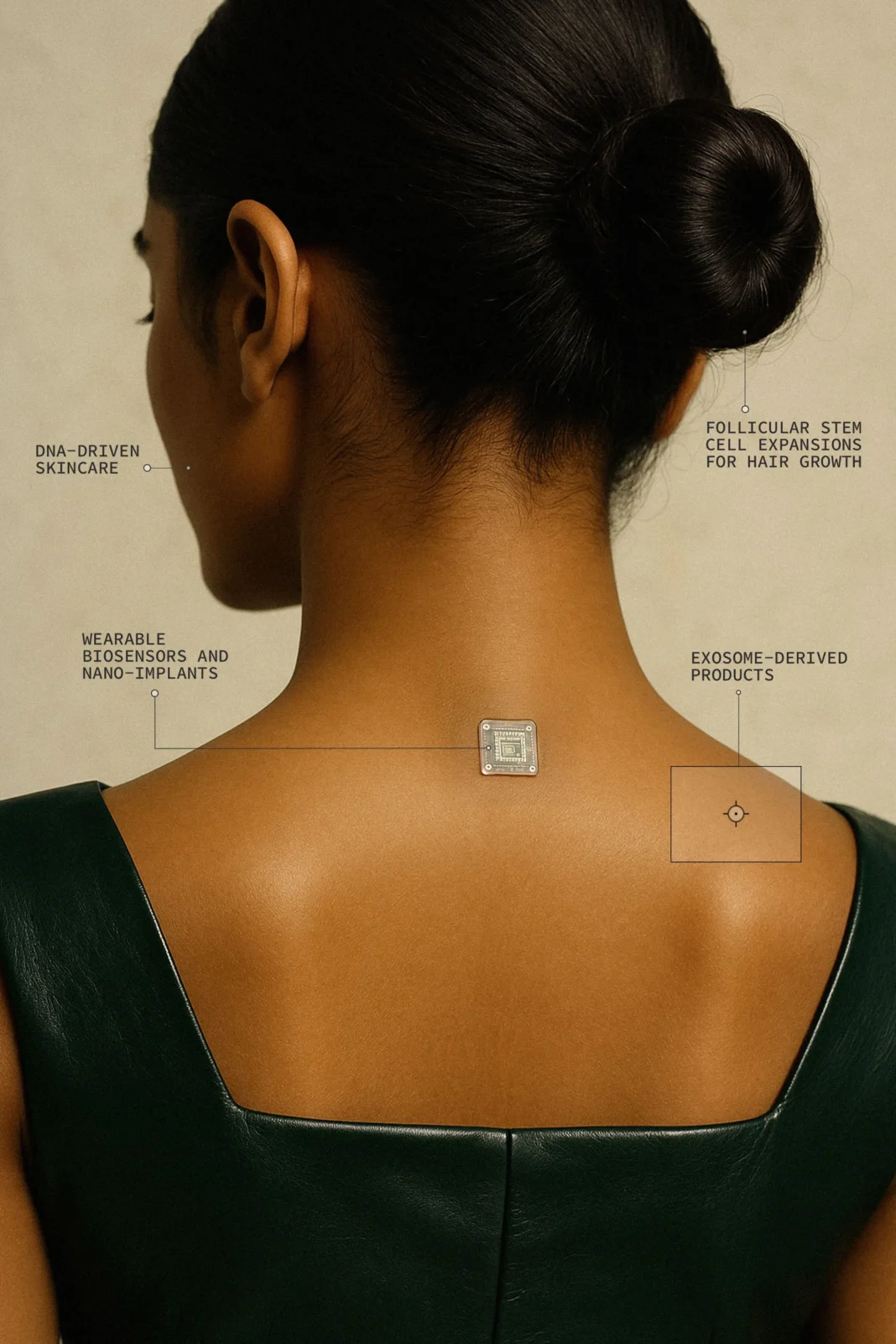
The beauty industry has always evolved alongside science. From the first anti-aging creams to today’s ingredient-focused skincare routines, innovation continues to redefine what beauty products can do. But the next wave of beauty may look dramatically different. Scientists and beauty companies are exploring technologies that go far beyond moisturizers and serums—enter DNA-based skincare, wearable biosensors, and microscopic beauty technologies.
These innovations hint at a future where beauty products are no longer generic solutions but deeply personalized systems designed around each individual’s biology.
A Shift Toward Hyper-Personalized Beauty
Traditional beauty products are typically designed for broad categories like “dry skin” or “aging skin.” However, researchers and beauty companies are now moving toward products tailored to a person’s unique genetic and biological profile.
In the near future, skincare may begin with a simple DNA test. By analyzing genetic markers linked to collagen production, pigmentation, or inflammation, brands could create formulas specifically designed for each individual’s needs. Instead of experimenting with dozens of products, consumers might receive precision-formulated treatments built from their personal biological data.
Surveys already suggest strong consumer interest in this direction. Many people are open to using beauty products that operate at the genetic level if they promise longer-lasting results and more effective skin improvements.
Beauty Meets Biotechnology
The technologies shaping tomorrow’s beauty products come from several scientific fields, including biotechnology, regenerative medicine, and artificial intelligence.
For example, stem-cell research is being explored for applications in hair growth and anti-aging treatments. In the future, scientists may even use 3D-printing techniques to create new hair follicles, offering alternatives to traditional hair transplant procedures.
Another area gaining attention is the use of exosomes and cellular signaling molecules, which may help stimulate skin repair and regeneration. These innovations suggest that beauty products could eventually work at the cellular level, supporting the skin’s natural repair systems rather than simply covering imperfections.
The goal is not just cosmetic improvement but long-term skin health and regeneration.
Wearable Beauty Technology
Technology is also transforming how people monitor and manage their skin health. In the future, wearable devices may track biological signals in real time, offering personalized insights into skin conditions and overall wellness.
Imagine a wearable patch or smart device that monitors hydration levels, hormone changes, or environmental stress. These sensors could communicate with skincare products or digital apps, automatically adjusting routines based on factors such as climate, sleep, or stress levels.
Some researchers are even exploring the idea of microscopic nanodevices that could deliver targeted ingredients directly to specific areas of the skin. These tiny technologies could release antioxidants, anti-inflammatory compounds, or collagen-boosting molecules exactly where they are needed.
Although many of these innovations are still in development, they represent a future where skincare becomes dynamic and responsive rather than static.
Artificial Intelligence in Beauty Development
Artificial intelligence is also playing a growing role in the beauty industry. AI systems can analyze large amounts of data—from consumer feedback to biological research—to help companies develop new products faster and more efficiently.
By studying patterns in skin health, lifestyle factors, and environmental conditions, AI can help researchers design more precise formulas and personalized beauty routines.
In the future, AI-powered beauty assistants could analyze your skin each morning, recommend customized treatments, and even adjust product formulations based on seasonal changes or hormonal cycles.
The Rise of “Beauty-Wellness” Integration
Another major trend shaping the future of beauty is the growing connection between appearance, health, and wellness. Instead of focusing only on topical products, the next generation of beauty solutions may include supplements, ingestible formulas, and metabolic treatments designed to support the body from within.
For example, scientists are studying how hormone regulation, metabolic health, and longevity research could influence skincare and aging. As people become more interested in maintaining their health over the long term, beauty products may evolve into holistic systems that support both appearance and well-being.
This approach reflects a broader shift in consumer expectations: people increasingly want products that deliver meaningful, long-lasting benefits rather than temporary cosmetic effects.
A Future Driven by Science and Data
While many of these technologies may sound futuristic, they are already being explored in laboratories and innovation centers around the world. Major beauty companies and biotech startups alike are investing heavily in research that merges science, technology, and skincare.
The beauty industry of tomorrow may look very different from what we know today. Instead of shelves filled with generic creams and serums, consumers might use customized treatments guided by DNA analysis, wearable sensors, and AI-driven recommendations.
In this new era, beauty will likely become more precise, more personalized, and more closely connected to overall health. As biotechnology and digital innovation continue to advance, the line between cosmetics, medicine, and technology may gradually disappear.
For consumers, that could mean one exciting possibility: beauty products designed not just to improve appearance—but to work in harmony with the body’s unique biology.