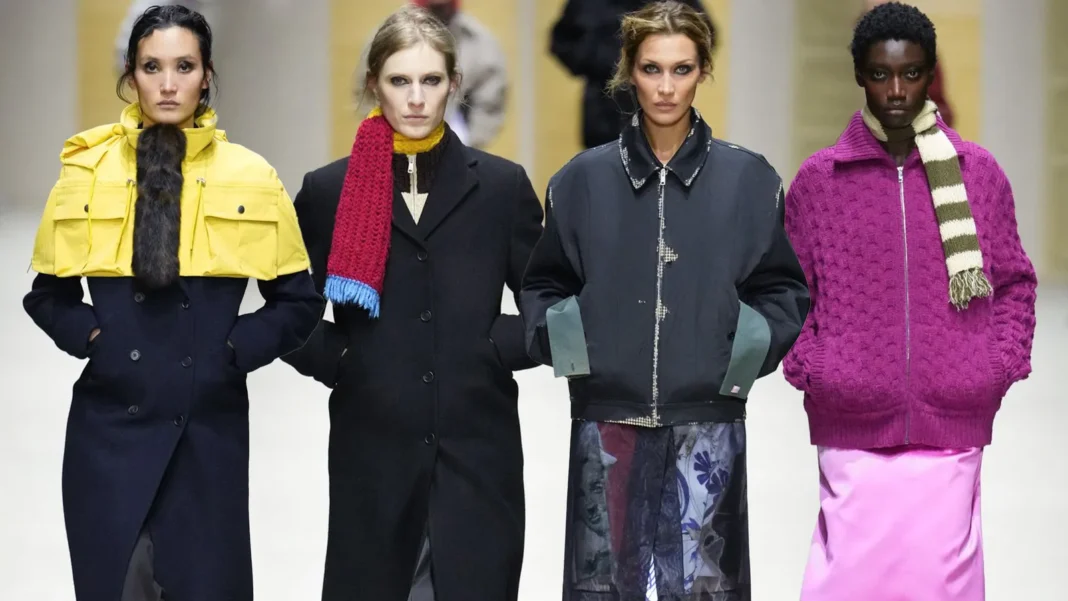

When Prada unveiled its Fall/Winter 2026 womenswear collection at Milan Fashion Week, co‑creative directors Miuccia Prada and Raf Simons presented more than a typical seasonal lineup — they offered a meditation on how we wear clothes and how clothing reflects complexity, identity, and transformation. At the heart of the collection was one idea: layering as a philosophy, not just a styling trick.
Rather than showcasing isolated looks, Prada’s show revolved around a single group of 15 models who each walked the runway four separate times — shedding or revealing layers with each pass. That meant what began as one complete look would gradually become another, unveiling multiple outfits from a single set of garments. These 60 cumulative runway moments weren’t just for spectacle; they embodied a deeper narrative about change, adaptability, and the fluidity of personal expression.
A Dynamic Wardrobe, Not Static Outfits
Prada’s approach for Fall 2026 was shaped by the belief that clothing mirrors real life — we add layers, we remove them, and in doing so, we navigate different contexts, roles, and moods. Physically and metaphorically, the layering told a story of transformation: outer shells peeled back to reveal tailoring, dresses, knitwear, and unexpected textures underneath.
This progressive reveal allowed viewers to see how a coat could conceal an embroidered satin dress, how a heavy jumper could transform into lightweight tailoring, or how sheer skirts could peek out beneath chunky sweaters. Each layer wasn’t accidental — it was a conversation between styles and materials, inviting onlookers to reflect on the choices they make when getting dressed.
New Perspectives on Identity and Complexity
Prada’s layering wasn’t just aesthetic — it was conceptual. The designers aimed to express the multifaceted nature of women’s lives, where every layer reflects a part of someone’s personality, history, and intention. Some garments incorporated archival references or intentionally distressed elements, giving them a lived‑in, textural feel that enhanced the impression of memory and time.
This idea of clothes as palimpsests — garments that contain traces of past and present — echoed across the show. Pieces were engineered to reveal what lies beneath both literally (layers) and figuratively (layers of meaning), inviting viewers to consider not just what women wear, but why they wear it.
How Prada Layered With Purpose
Layering at Prada wasn’t random; it was a deliberate act of design. The collection combined diverse elements — tailoring, sportswear, embroidered satin, and archival textures — in ways that defied rigid fashion hierarchies. Fabrics were superimposed, cut and exposed, frayed and aged on purpose, creating a texture that felt both historical and immediate.
For example, trench‑like outerwear opened to reveal boldly printed skirts beneath, while knit sweaters appeared under sleek coats. Even seemingly minimal garments held surprises — layers of memory and material waiting to be revealed as models stripped or altered their looks on successive walks.
A Living Wardrobe for a Complex World
The setting — Fondazione Prada’s Deposito, with its historical art and layered architecture — reinforced the collection’s theme. Surrounding the runway were artifacts spanning centuries, echoing the idea that clothing, like human life, accumulates meaning over time.
This conceptual framing reflected Prada’s view that fashion isn’t static; it’s alive and evolving, shaped by culture, memory, and individual experience. The repetitive shedding and layering of garments became a powerful metaphor for daily transformation: how a person moves through the world, how identity can be assembled piece by piece, and how clothing both reveals and conceals.
Why Prada’s Layering Matters
More than a runway experiment, Prada’s Fall 2026 womenswear line offers a fresh model for dressing in the 21st century: one where clothing becomes a tool of expression, not just decoration. It suggests that wardrobe isn’t about choosing one look, but about navigating multiple selves across contexts — from work to leisure, from public to private life.
In a fashion world often focused on spectacle and gimmick, Prada’s layered philosophy distinguished itself by rooting its narrative in something deeply human: the way we live in our clothes — and how those clothes live on us. This was a show about movement, revelation, and the stories garments can tell when we let them unfold.
What It Means for Street Style and Beyond
While runway deconstruction won’t translate literally to everyday wardrobes for most, the principles behind it — mixing textures, embracing versatility, and treating layering as a stylistic language — are rippling outward into broader fashion conversations. Milan’s Fall 2026 season overall emphasized layering as a key trend, with everything from coats over knitwear to shirts under tailored jackets gaining momentum.
Prada’s show didn’t just make headlines — it shaped them, proving that tomorrow’s fashion stories might come not from isolated pieces, but from how we assemble, adapt, and reinterpret clothing in real life.
If you want, I can help you pair this with gallery captions or suggested outfit breakdowns based on the Prada runway visuals! Just let me know what style direction you’re aiming for. 👗✨
Here’s a fresh, original English article you can paste directly into your WordPress blog about the relaunch of The SIL — a vintage fashion destination highlighted by Vogue. It rephrases and restructures the core news while keeping the key ideas and context intact:
The SIL Vintage Destination Relaunches in 2026 — A New Chapter for Story‑Driven Fashion
Vintage fashion lovers have something truly special to look forward to in 2026. The SIL, an online vintage destination that puts storytelling and personal history front and center, is relaunching with an expanded vision that underscores depth, provenance, and emotional attachment in pre‑owned fashion.
In a fashion landscape dominated by algorithm‑driven resale platforms and fast‑paced trends, The SIL’s refreshed approach feels refreshingly intentional: it’s not just about buying vintage clothes, but understanding the life behind each piece — who wore it, what it meant to them, and why it still matters.
A Curated Vintage Experience With Real Meaning
The SIL — an acronym for “Stuff I Love” — originally launched in 2017 and has evolved significantly in its mission over the past decade. For its 2026 relaunch, the platform has been revamped to highlight curated selections from closets of stylish, influential women rather than generic resale stock. Each item comes with a narrative, connecting customers to the garment’s real‑world backstory.
Unlike typical resale sites that rely on search algorithms and trend‑based recommendations, The SIL leans into emotional and cultural context, helping shoppers form a deeper connection with every piece they discover. It champions the idea that vintage fashion isn’t just sustainable — it’s sentimental.
Closet Features: A Personal Way to Shop Vintage
One of the most exciting elements of the relaunch is The SIL’s “Closet Features” — a rotating lineup of curated, digital pop‑up collections drawn from the wardrobes of notable contributors. Each closet feature showcases a limited batch of pieces — typically 10 to 20 items per person — with wardrobe insights, personal reflections, and historical notes built around them.
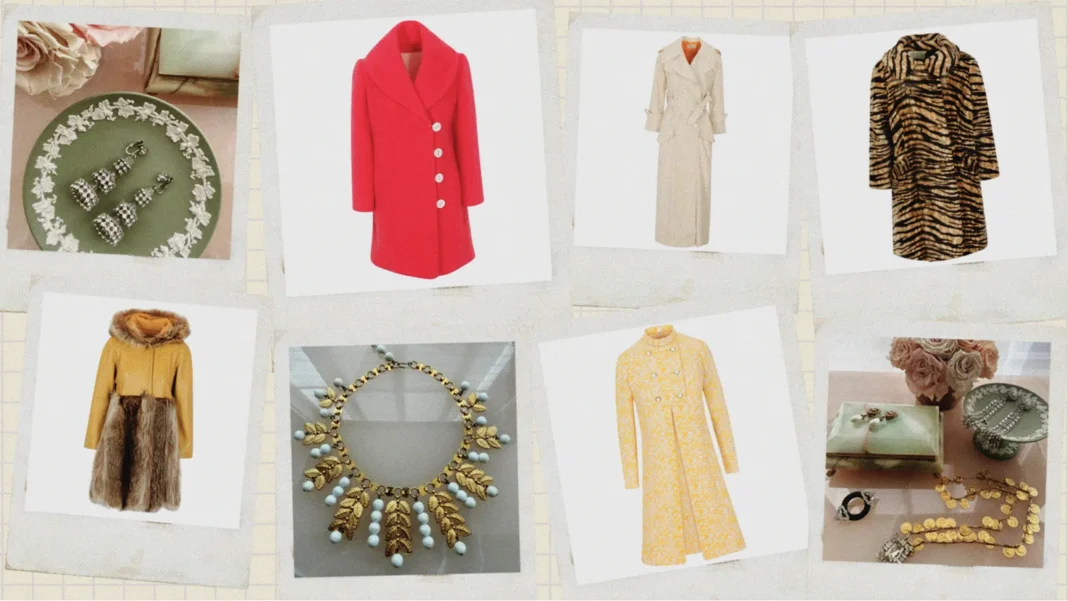
The relaunch opens with Dee Ocleppo Hilfiger’s closet, featuring standout items like her beloved coat collection. Proceeds from her closet launch will benefit Next for Autism, illustrating how The SIL is blending fashion with purpose. Future contributors include figures such as Amy Fine Collins, Roya Shanks, Bunny Williams, and others connected to style, culture, and design.
This format not only gives shoppers a chance to own vintage treasures, but also makes them feel like they’re inheriting pieces with real stories and emotional value — a sharp contrast to the anonymous thrift‑and‑resell model that currently dominates the online space.
Why The SIL’s Relaunch Matters
Even beyond the rarefied world of luxury vintage, secondhand fashion has been gaining momentum — particularly among younger consumers who value sustainability, uniqueness, and personal expression. According to trend reports, searches for thrift and vintage styles have soared in recent years, with categories like “dream thrift finds” exploding in popularity online.
What makes The SIL distinctive is its focus on provenance and storytelling. Instead of treating vintage simply as recycled clothing, the platform encourages customers to appreciate each piece as a cultural artifact — a garment shaped by lived experience and personal memory.
This approach resonates in a moment when fashion consumers increasingly want depth and connection from the things they wear. Rather than fast‑fashion impulse purchases or recycled “style mashups,” many shoppers today are seeking meaningful pieces that reflect identity, history, and personal narrative — and The SIL is building a platform to meet that desire.
Fashion With a Human Touch
The reimagined The SIL also reflects wider shifts in fashion culture where authenticity and craftsmanship are regaining prominence. In an industry often criticized for superficiality and waste, celebrating provenance and personal stories feels like a return to fashion’s human elements — the memories, relationships, and cultural touchstones woven into every garment.
By positioning itself as a space that values essence over metrics, The SIL’s 2026 relaunch may signal a new direction in how we think about vintage shopping — one that fuses curation, emotional resonance, and heritage in a digital environment. The result is less about “finding a deal” and more about discovering a story.
Looking Ahead: What to Expect
As The SIL goes live in 2026, fashion fans and vintage collectors alike should anticipate:
- Closet Features with personal narratives and limited‑edition items
- Curated pop‑ups that feel more like cultural experiences than shopping trips
- Charitable tie‑ins and purposeful giving connected to each launch
- A richer connection between garments and the people who wore them
The relaunch of The SIL ultimately reminds us that fashion isn’t just fabric and stitching — it’s memory, identity, and legacy. For anyone who cherishes style with depth, The SIL’s new chapter promises to be one of the most intriguing vintage destinations of 2026.